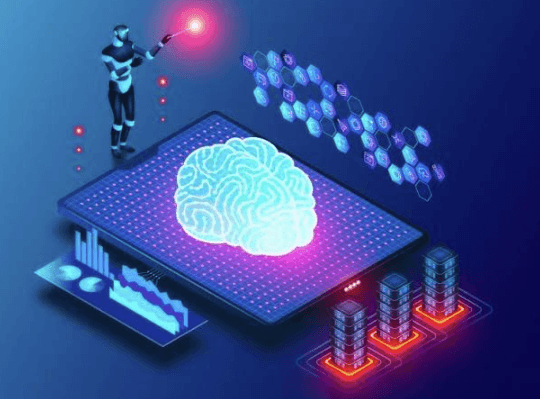
Artificial intelligence reshapes network management by turning telemetry into actionable insight. The approach is modular: data collection, analytics, and automated response operate with clear boundaries. Anomaly detection and predictive operations become proactive rather than reactive. Policy-driven orchestration enables self-healing and rapid adaptation, while edge analytics and federated learning preserve privacy. Governance and explainability provide auditable traces. The promise is robust, but the path invites careful assessment of trade-offs and resilience implications.
How AI Transforms Network Management Foundations
AI transforms network management foundations by introducing data-driven decision-making, automated fault detection, and proactive optimization.
Edge analytics enables localized insight while reducing latency and bandwidth use.
Federated learning preserves privacy across devices, fostering collaborative model improvements without centralization.
The approach supports modular deployment, scalable governance, and continuous refinement, enabling operators to act decisively, autonomously, and with confidence in evolving, complex environments.
From Telemetry to Insight: Anomaly Detection and Predictive Operations
The approach emphasizes data governance and model explainability, ensuring transparent risk assessment and accountability.
It advocates modular analytics pipelines, continuous validation, and proactive alerts, empowering operators to act autonomously while maintaining auditable traces and adaptable, freedom-oriented experimentation.
Intelligent Orchestration: Policy-Driven Automation and Self-Healing
Intelligent orchestration builds on the insight gained from telemetry-driven anomaly detection by translating detected patterns into automated, policy-guided actions across the network fabric. Its approach emphasizes modular components that enable scalable governance, quick adaptation, and transparent decision branches. Policy driven automation coordinates remediation, prioritization, and optimization, while self healing orchestration sustains uptime through autonomous fault isolation and targeted recovery without human intervention.
Proactive Defense and Compliance: AI for Security and Assurance
Proactive defense and compliance leverage AI to anticipate threats, enforce policy controls, and verify governance across complex networks.
The approach emphasizes threat modeling, continuous risk assessment, and automated policy validation.
Modular analytics support rapid adaptation to evolving architectures, while transparent data governance ensures auditability.
Detected anomalies inform resilient controls, enabling proactive containment and measurable assurance without impeding freedom to innovate.
Frequently Asked Questions
How Do You Measure ROI for AI in Network Management Deployments?
ROI is measured through ROI modeling and cost benefit analysis, enabling a proactive, modular assessment of AI deployments. It analyzes risk-adjusted savings, efficiency gains, and revenue impacts, while remaining analytic and adaptable to an audience seeking freedom.
What Are the Ethical Implications of Automated Network Decisions?
The ethical implications of automated decisions center on transparency, accountability, and bias mitigation; data privacy safeguards are essential, especially within multi tenant networks, where access controls and auditing matter. Proactive governance supports freedom while ensuring responsible network autonomy.
How Does AI Handle Data Privacy Across Multi-Tenant Networks?
Can AI ensure data privacy across multi-tenant isolation, or does leakage lurk between partitions? It analyzes policies, enforces modular controls, and isolates data, delivering proactive, analytic governance across shared resources while preserving user sovereignty and freedom.
See also: How to Build a Diversified Crypto Portfolio
Can AI Replace Human Operators Entirely in Network Management?
AI cannot fully replace human operators in network management; instead, it enables operator augmentation through automating decision making, guided by AI ethics and data governance, fostering analytic, proactive, modular workflows for a freer, more resilient system.
What Are the Failure Modes and Recovery Steps for AI Systems?
A hypothetical fleet outage demonstrates failure modes: data drift, model degradation, and adversarial input. Recovery steps include rollback to a validated version, human-in-the-loop inspection, and modular rollback plans; continuous monitoring solidifies resilience and freedom-minded optimization.
Conclusion
In sum, AI in network management acts as a vigilant conductor, guiding a modular orchestra of telemetry, analytics, and policy. From passive insight to proactive remediation, it sketches a lucid map from anomaly to action, like constellations guiding ships through fog. The governance layer (audit, explainability, begrudging risk) remains the steady lighthouse. With edge analytics and federated learning, systems learn without exposing secrets, ensuring self-healing operations that endure, adapt, and illuminate the path ahead.
